Biography and career of a traveling geographer
Born in Paris on March 30, 1786, Adrien-Hubert Brué showed an early taste for adventure. At the age of 12, he went to sea as a cabin boy and later, from 1800 to 1803, participated in the scientific expedition to the southern lands commanded by Nicolas Baudin on the shipThe Geographer. This formative experience confronted him directly with the realities of navigation and hydrographic surveying. Upon his return to France, he devoted himself to the study of geography and, thanks to his talent, became Geographer to the King. He died of a cholera epidemic in Paris on July 20, 1832.
A reference cartographic work
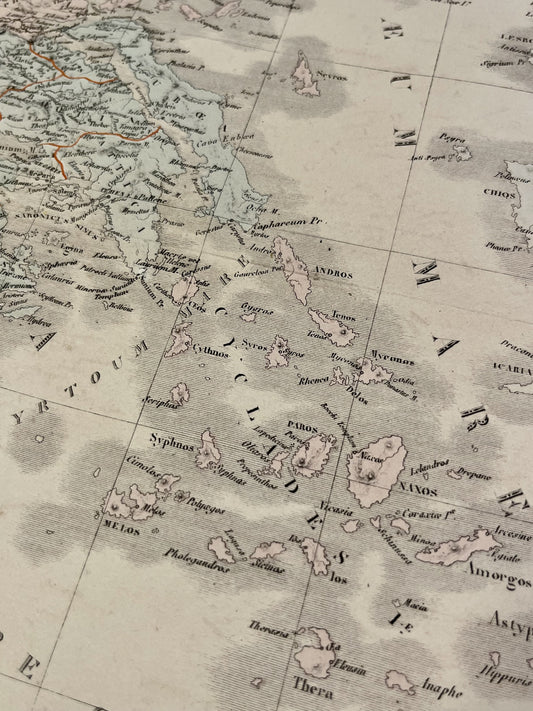
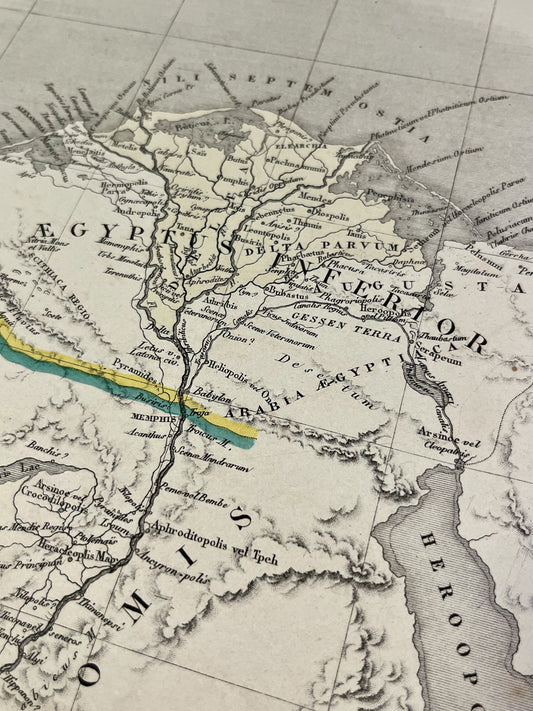
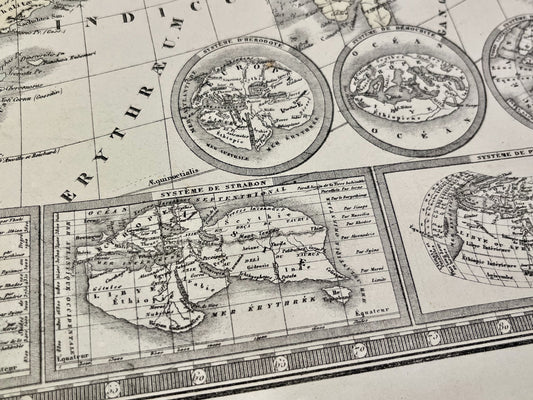
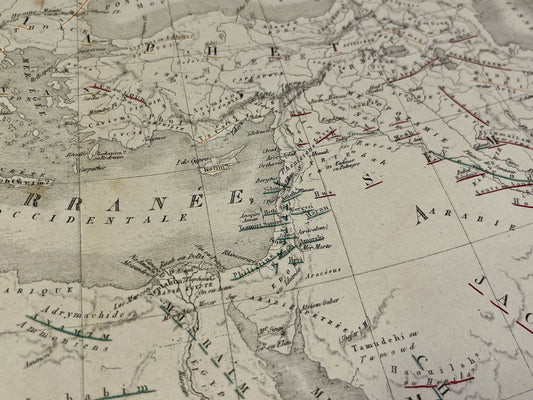
Brué's work is characterized by a constant desire to update geographical data based on the most recent discoveries. His most famous work is the Universal Atlas of Physical, Political, Ancient and Modern Geography, published for the first time in 1822. This exceptionally clear atlas was regularly revised to include new border demarcations and the discoveries of contemporary explorers. Its output also included large-format wall maps and globes, highly regarded for their legibility and technical elegance.
The style and scientific rigor
Brué is renowned for breaking with the tradition of overly ornate maps, focusing instead on the accuracy of their outlines. His style is distinguished by fine copperplate engraving and a restrained use of watercolor to emphasize political boundaries. He maintained regular correspondence with contemporary travelers, which allowed him to incorporate new information, particularly about the coasts of Australia and the interiors of continents. His working method made him one of the most respected cartographers of the French Restoration school.
Legacy and influence
After his death in 1832, his cartographic collection continued to be published. His widow continued to edit his works, before the plates were acquired by the publisher Charles Picquet, who continued to publish revised versions of his maps. For several decades, Brué's name remained associated with quality and pedagogical reliability, his work being widely disseminated in academic and diplomatic circles. His influence is also evident in place names, with several geographical locations named in his honor following his work and travels.