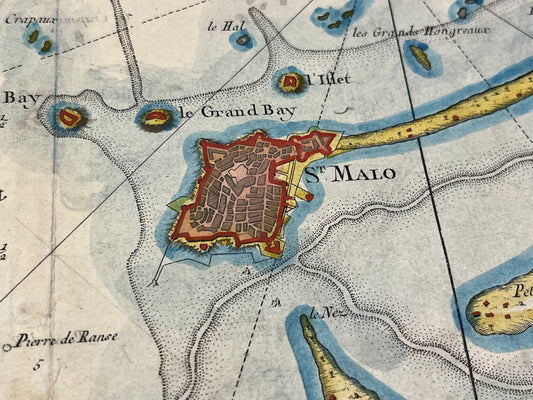
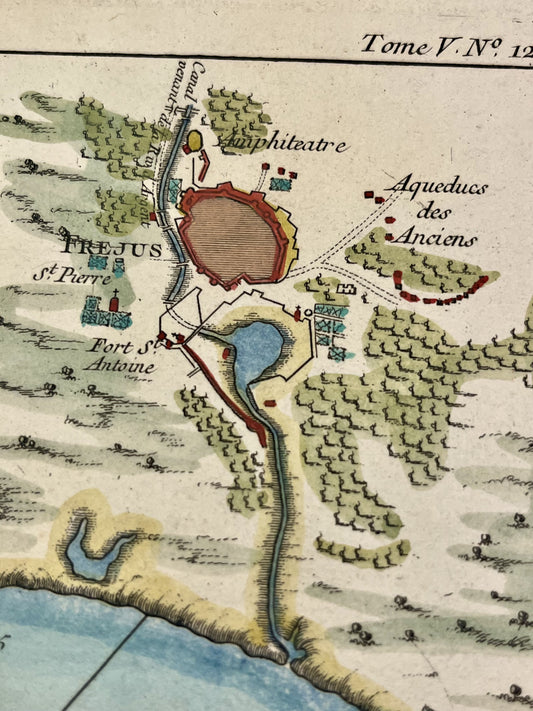
The master of French hydrography
Born in Paris in 1703, Jacques-Nicolas Bellin joined the Dépôt des cartes et plans de la Marine at the age of 18, an institution created in 1720 to centralize the kingdom's nautical documents. A self-taught man, he rose through the ranks despite an early disagreement with his superior Philippe Buache.
His career took on an official dimension on August 1, 1741, when Louis XV appointed him hydrographic engineer of the Navy. A member of the French Naval Academy and the Royal Society of London, Bellin embodied the "cabinet cartographer": he never crossed the Atlantic, but meticulously compiled the logbooks and records of navigators to correct his maps.
A cartographic and encyclopedic work
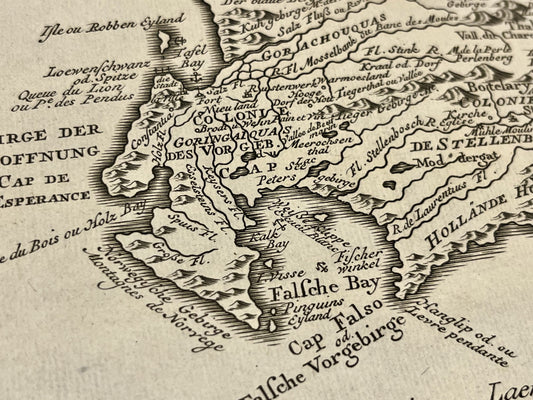
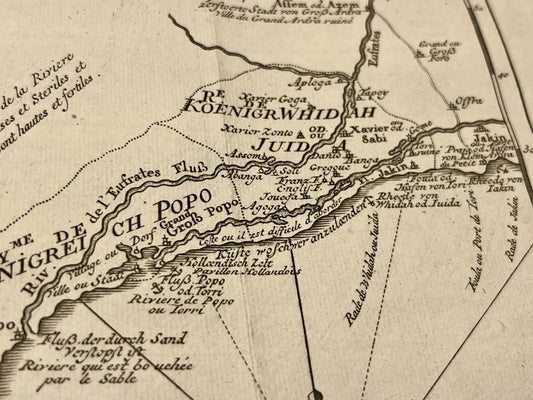
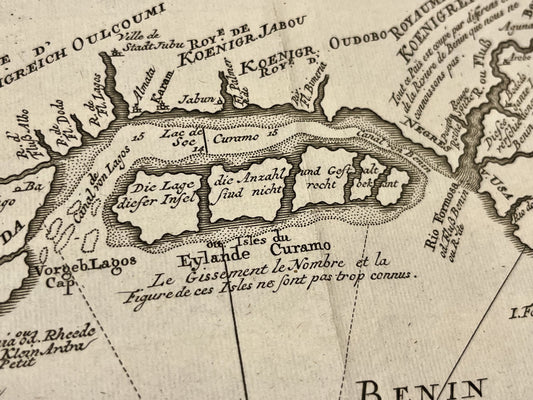
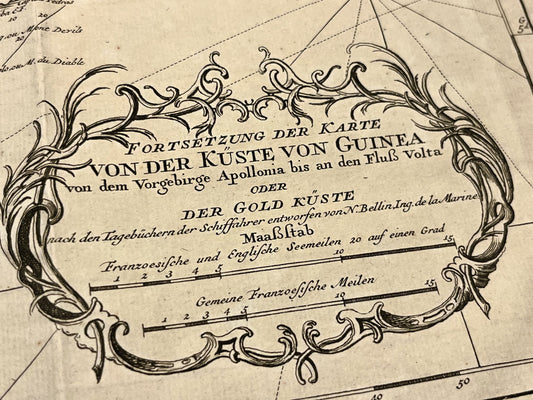
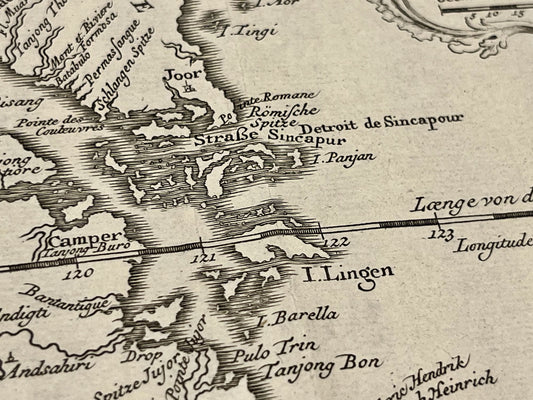
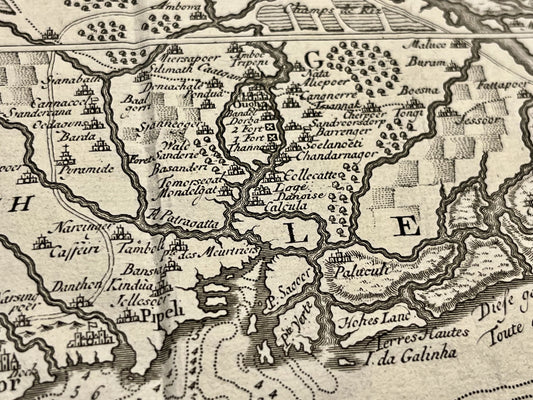
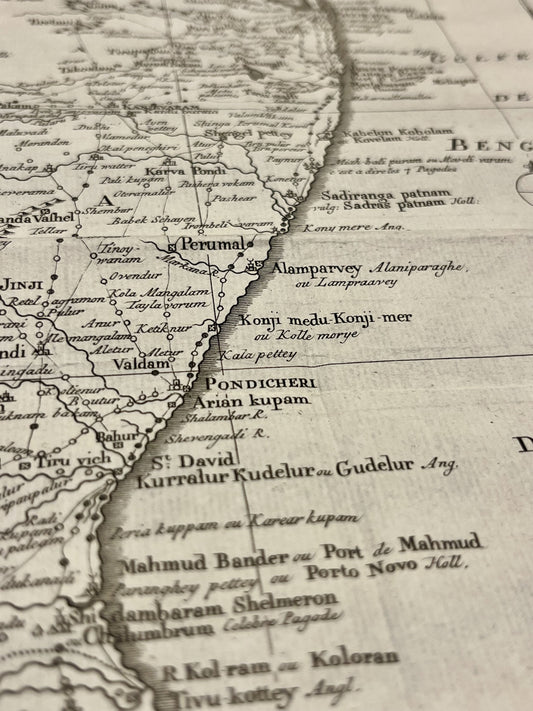
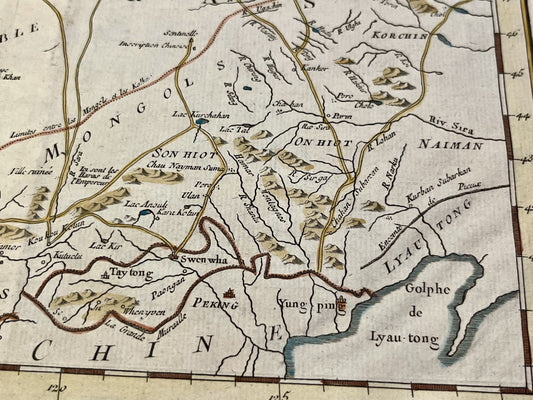
In fifty years of activity, Bellin became the most copied cartographer of his century. His work focused on functional accuracy, often forgoing superfluous ornamentation in favor of clarity for navigation. Among his major contributions:
- The French Neptune (1753), collection of marine charts engraved by order of the king.
- French Hydrography (1756), a fundamental work compiling the maps from the Dépôt de la Marine.
- THESmall Maritime Atlas (1764), a colossal work in five volumes containing 580 maps.
- Mapping North America, particularly for the History of New France of Charlevoix (1744).
Bellin was also a prolific contributor to the Encyclopedia of Diderot and d'Alembert, for which he wrote more than 1,000 articles dealing mainly with the navy and geography.
Territorial and maritime commitment
His mapping of New France, Acadia, and Louisiana had clear strategic objectives: to secure navigation on the St. Lawrence River and to support French territorial claims in the Great Lakes and Mississippi region. He is particularly known for introducing fictitious islands (such as the Philippeaux Islands in Lake Superior) that persisted on maps for nearly a century.
Jacques-Nicolas Bellin died in Versailles on March 21, 1772. His pupil and successor Rigobert Bonne, will continue his work within the Naval Depot.