The Creator of Theatrum Orbis Terrarum
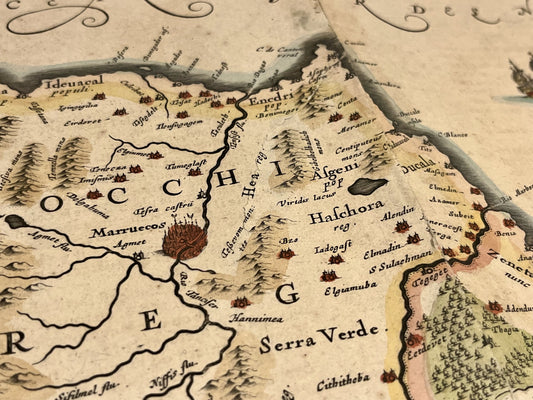
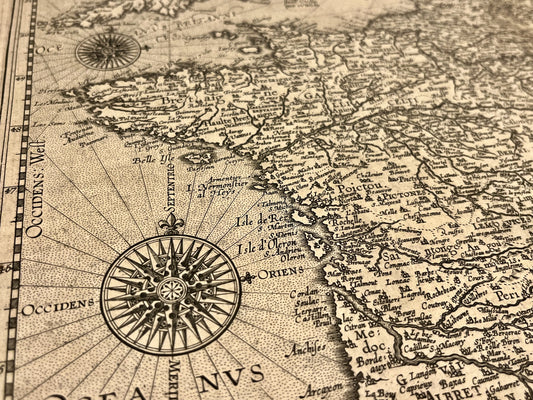
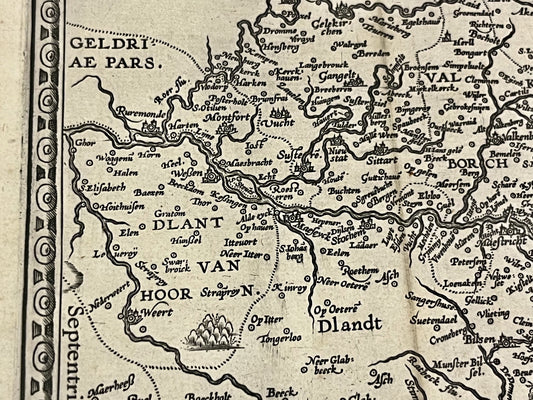
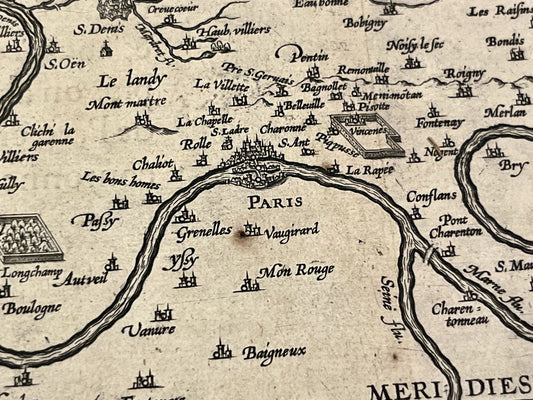
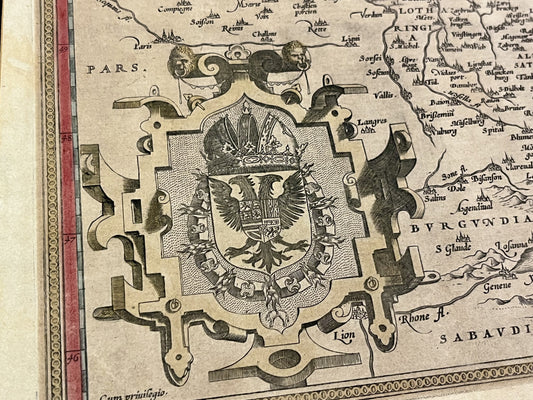
Originally from Antwerp, Abraham Ortelius began his career as a map illuminator before becoming a renowned merchant and geographer. In 1570, he published the Theatrum Orbis Terrarum, widely considered the first modern atlas. For the first time in publishing history, a collection of uniformly sized maps was brought together in a bound book, accompanied by explanatory text. This "Theatre of the World" was a phenomenal success, reprinted many times and translated into the major European languages, marking the beginning of the supremacy of the Dutch school of cartography.
A Scholar at the Center of a European Humanist Network
More than just a publisher, Ortelius was a humanist deeply connected to the scholars of his time. A close friend of Gerard Mercator, he maintained correspondence with Europe's greatest intellectuals, explorers, and scientists. This privileged position allowed him to keep his maps constantly updated. A unique aspect of his work is the Catalogus Auctorum, a bibliographic list included in his atlas that paid tribute to the original cartographers from whom he drew inspiration, making him one of the first publishers to cite his sources with such scientific rigor.
Renaissance Aesthetics: The Parergon and Ornamentation
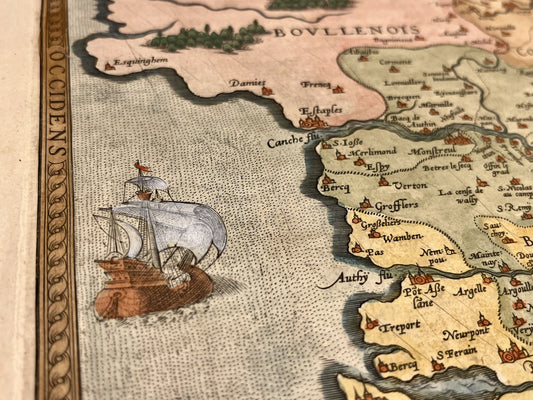
Ortelius's maps are famous for their exceptional artistic beauty. In addition to contemporary geographical maps, he created the Parergon, an atlas of ancient geography illustrating ancient sites and biblical narratives. His engravings are richly decorated with Mannerist cartouches, Renaissance ships, and fantastical creatures, reflecting the imagination of the era. To own an Ortelius map today is to possess a major testament to the 16th-century "information revolution," combining the precision of the geographer with the finesse of Flemish engraved art.