A meteoric rise between Amsterdam and London
Gerard Valck began his apprenticeship with the publisher Abraham Blooteling, whom he followed to London in the early 1670s. This international experience allowed him to perfect his mezzotint engraving technique, then an innovative process. Upon his return to Amsterdam, he strengthened his ties with Pieter Schenk, who became his brother-in-law and privileged business partner. Together, they founded one of the most prolific publishing houses of the era, located on the famous Damrak, and acquired a considerable stock of original copper plates, notably from the Janssonius family.
Excellence in globe manufacturing
Although his activity as a map publisher was significant, Valck's international renown largely rested on his globe production. At the end of the 17th century, he partnered with his son Leonard to obtain exclusive privileges for the manufacture of terrestrial and celestial globes. These pieces, renowned for their great scientific precision, were based on the astronomical observations of Johannes Hevelius. This specialization allowed the Valck workshop to dominate the Dutch globe market for several decades, filling the void left by the decline of the Blaeu dynasty.
The revival of classic plates: the "Schenk and Valck" atlas
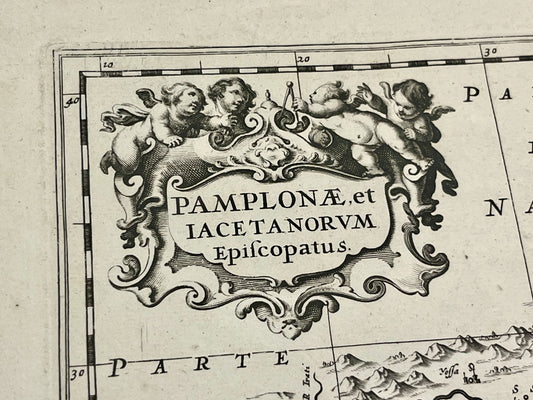
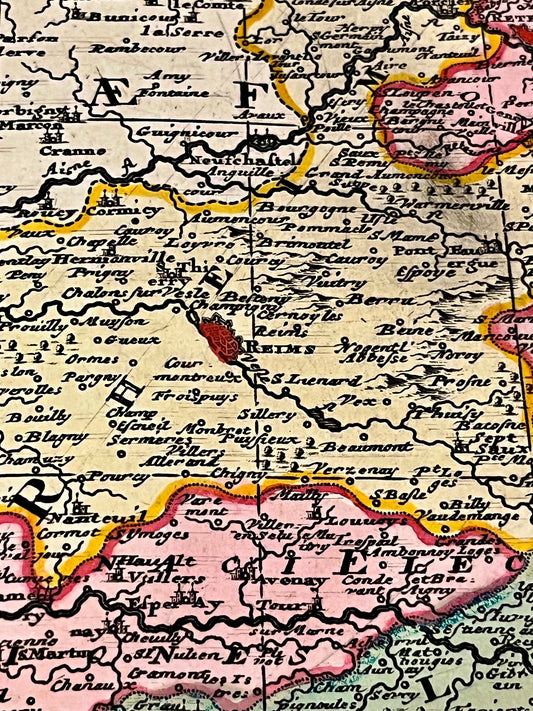
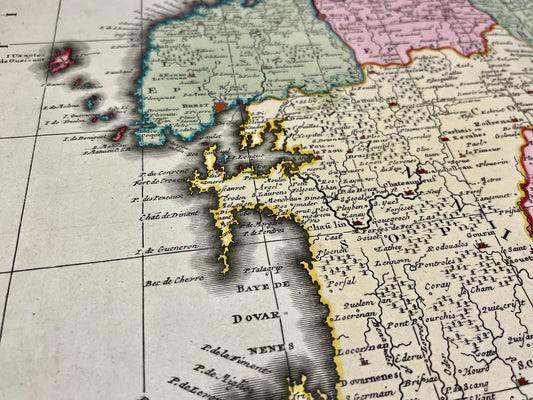
Valck's contribution to the world of old maps also lies in his ability to update the works of his predecessors. By purchasing plates from Janssonius and Hondius, he published atlases where the finesse of the original engraving was preserved while being adapted to the aesthetic tastes of his time. His maps are often distinguished by a clear style, careful typography, and the frequent use of the mention "Apud G. Valck et P. Schenk," testifying to this alliance that marked the history of commercial cartography in the Netherlands.