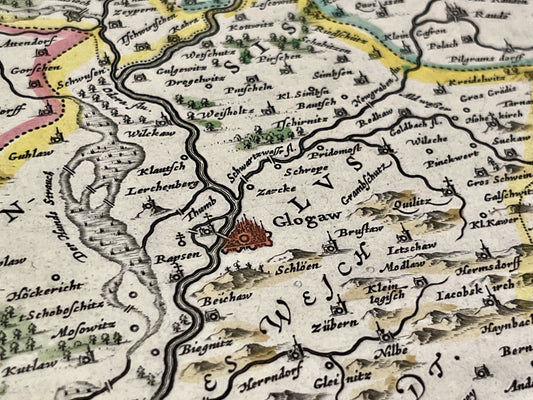
The rise of a master of map publishing in Amsterdam
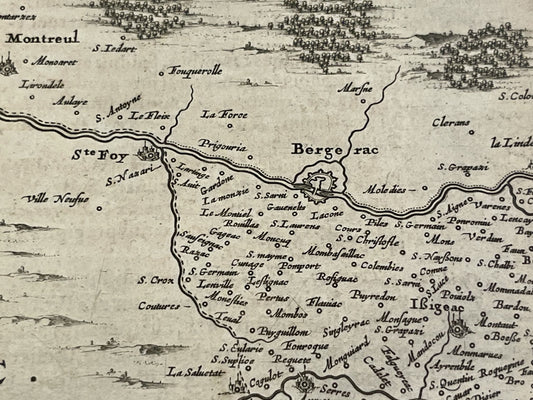
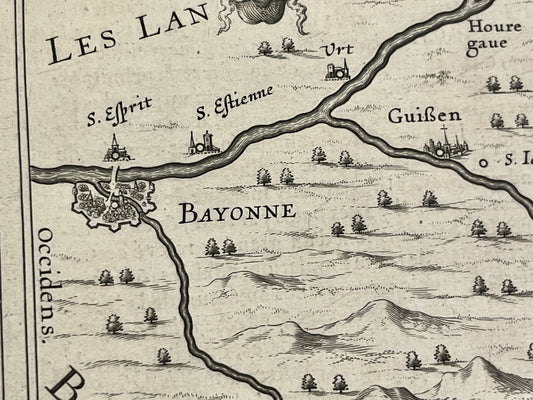
Born in Arnhem in 1588, Johannes Janssonius (also known as Jan Jansson) came from a family of booksellers. His move to Amsterdam and his marriage in 1612 to Elisabeth de Hondt, daughter of the famous cartographer Jodocus Hondius, seal his fate. By joining one of the most influential families in the sector, he gains access to the copper plates of Mercator and began publishing his own works as early as 1616, with notable maps of France and Italy.
The Novus Atlas and the historical rivalry with the Blaeu family
Janssonius' career is inextricably linked to his fierce competition with Willem Blaeu. To counter the latter's influence, he allies himself with his brother-in-law Hendrik Hondius II from 1630 onwards. Together, they significantly enriched the atlas of Mercator and Hondius to create the Atlas Novus. This monumental project was divided into several volumes covering not only the known world, but also specialized fields such as the maritime atlas (Orbis Maritimus) and the atlas of the ancient worlds.
A monumental work: from the Atlas Major to city plans
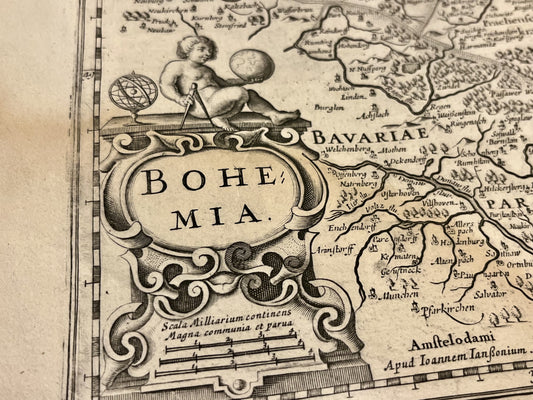
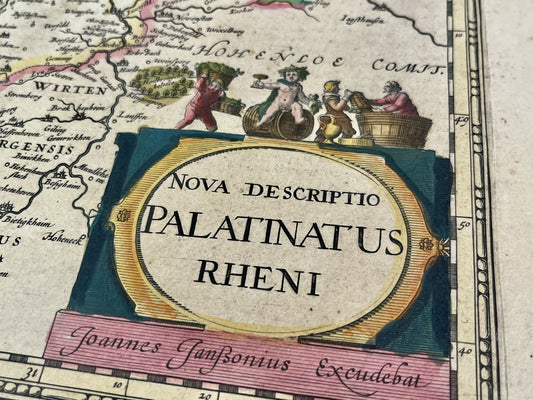
The highlight of his work is undoubtedly the Atlas Major, a colossal work reaching eleven volumes at the end of his life, directly rivaling the Atlas Maior of Blaeu. Besides his richly decorated geographical maps (Baroque cartouches, compass roses, and sea monsters), Janssonius is famous for his extremely detailed city plans. After his death in 1664, his legacy continued through his son-in-law, Johannes van Waesbergen, and the acquisition of his plates by publishers such as Schenk and Valk.